French water pendulum tech makes ocean waves a reliable power source

A French wave energy company has secured a multi-million dollar funding round to advance its pioneering technology, aiming to deploy a full-scale demonstrator and fast-track international expansion.
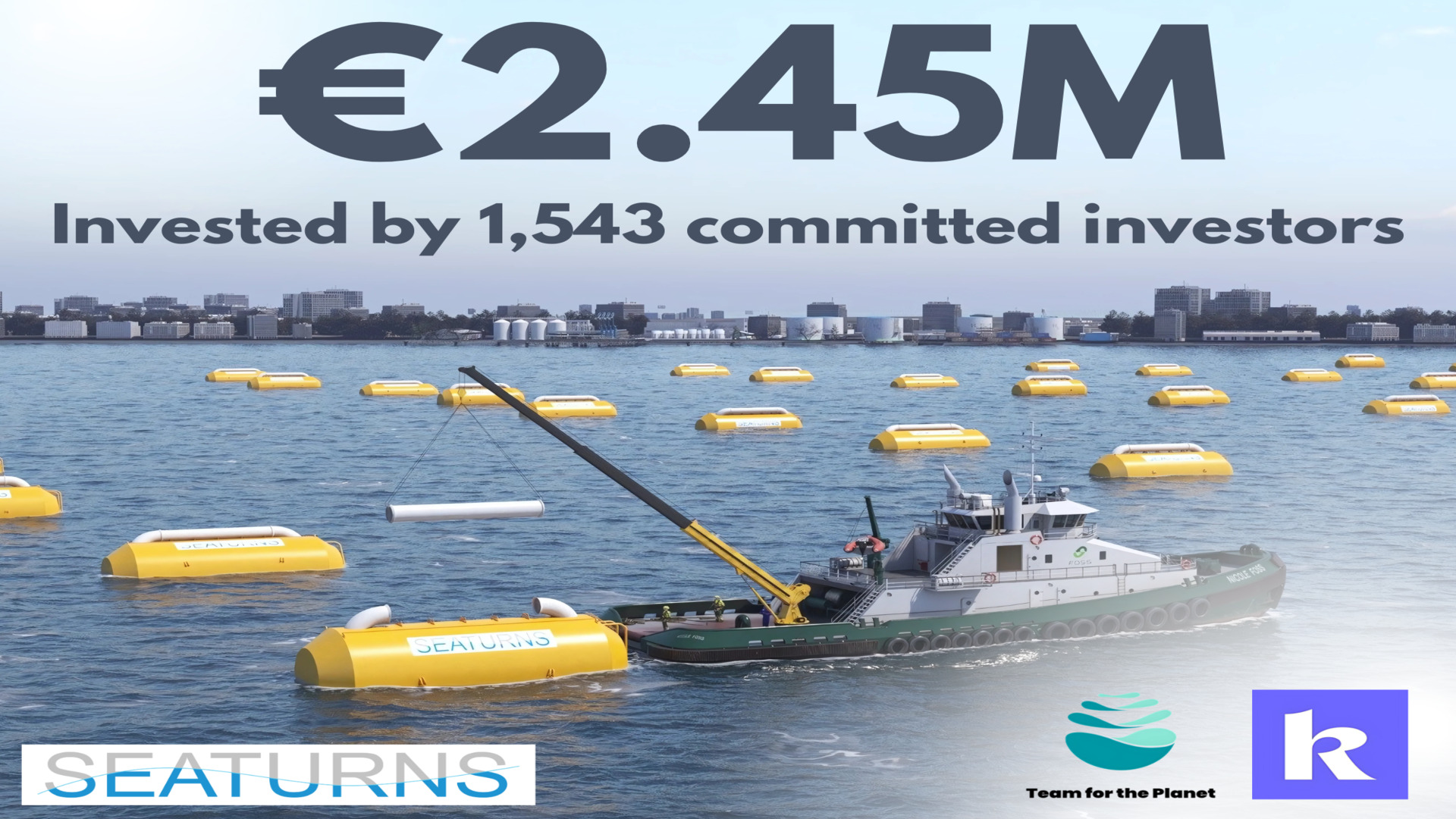
Bordeaux-based Seaturns raised USD 2.9 million (EUR 2.45 million) to advance and industrialize its wave energy technology. The round, which was conducted primarily via the climate tech investment platform Keenest, drew support from 1,543 individual backers and key institutional investors.
“We warmly thank the 1,543 investors who have placed their trust in us,” Vincent Tournerie, founder and president of Seaturns, emphasized. “This support is critical for deploying our full-scale demonstrator and accelerating our industrial development.”
According to officials, the support follows the company’s nearly decade-long effort to develop a patented wave energy solution designed for simplicity, resilience, and scalable production.
A promising prototype
Seaturns’ breakthrough quarter-scale prototype recently completed 18 months of rigorous testing at Ifremer in Brest, France. It reportedly yielded promising results in both electricity generation and system durability.
The SEM-REV site, operated by the OPEN-C Foundation, features subsea infrastructure, environmental monitoring systems, and technical support, all of which are resources designed to minimize industrial and environmental risks ahead of market deployment.
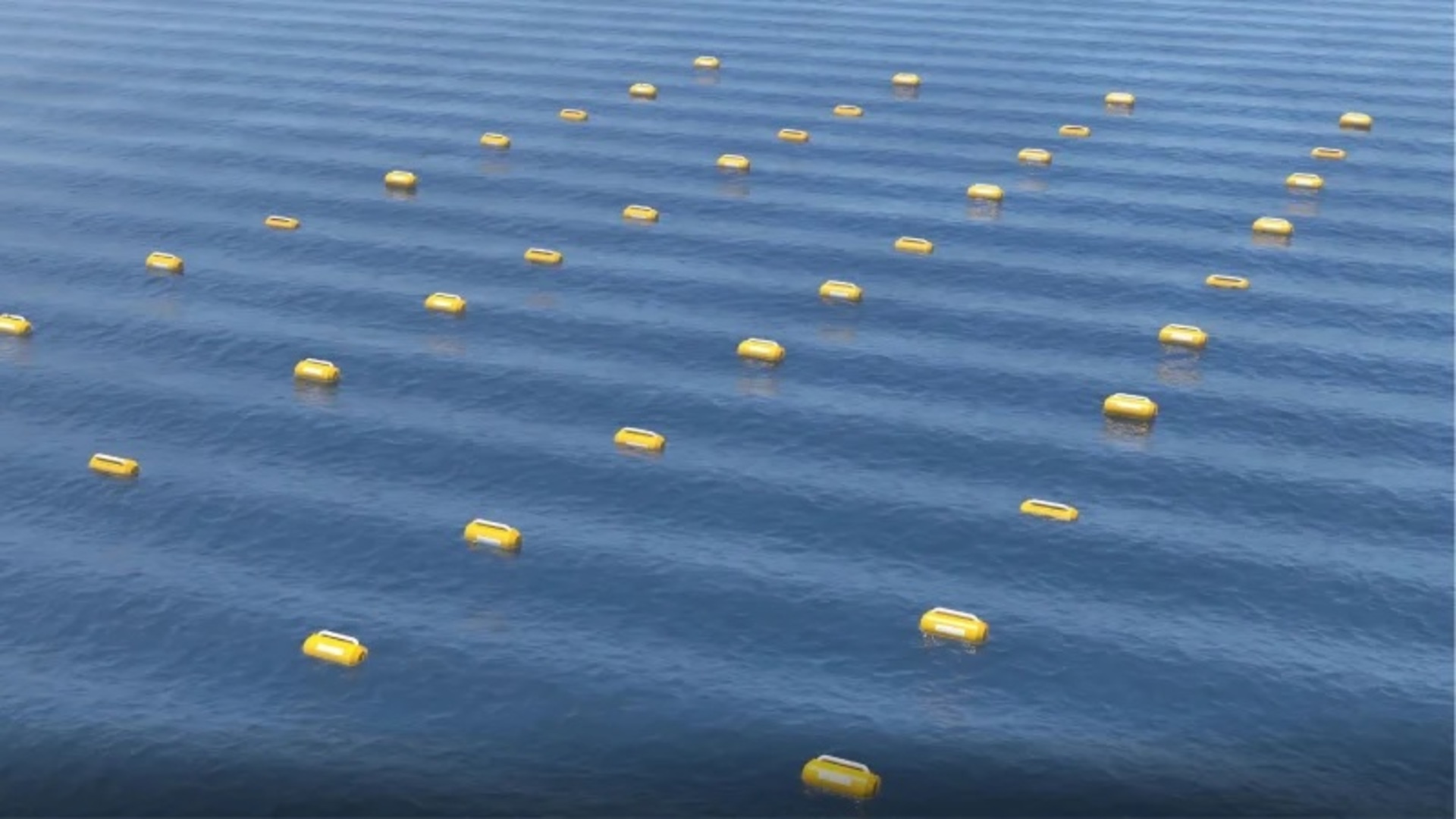
Harnessing ocean wave motion to generate electricity, the technology features a cylindrical wave energy converter (WEC) that moves horizontally with the motion of ocean swells, a movement known as surge. Using a patented anchoring system, the device converts this surge into a pitching motion, enabling efficient energy capture.
Credit: Seaturns
Designed for cost efficiency, the WEC supports simplified offshore installation, low-maintenance operation, and reduced environmental impact. It aims to lower production and operating costs compared to conventional wave energy technologies.
Inside the converter, a water pendulum and two air-filled chambers, positioned at the top and separated by a vertical axial divider, generate airflow through pressure cycles driven by the floater’s pitching motion. This airflow powers a turbine directly coupled to a generator, producing electricity.
Preparing for commercial deployment
The company stated that the funds raised will be allocated to three main strategic objectives, including deploying a full-scale demonstrator at the SEM-REV offshore test site in summer 2025, beginning industrial-scale production, and expanding commercialization efforts in global markets.
Renan Labrunie, chief operating officer at Keenest, praised the technology’s impressive performance during trials that concluded in February 2025.
“We are thrilled to support them in this new phase of development – this project we’ve been following for a long time, and it fits perfectly within our investment focus on climate and carbonization,” Labrunie said.
Credit: Seaturns
“I invested in Seaturns because we are developing a high-potential emerging technology for Europe’s energy mix,” Lawrence Sigaud, deputy CEO of Seaturns, said in a press release. “We are providing a concrete solution to decarbonization challenges and actively preparing for industrial scale-up.”
Seaturns initiated a fundraising campaign to advance its wave power technology following years of research, development, and testing earlier this year. It then signed an agreement with Fondation OPEN-C to deploy a full-scale demonstrator at the SEM-REV offshore test site near Le Croisic, with installation planned for summer 2025.
Apart from Open‑C, its main partners include Bpifrance, Horizon Europe, i‑Nov, Nouvelle‑Aquitaine, and Ifremer.
Correction (July 8): The headline of this article previously stated that the technology had been “unveiled.” It has been updated to reflect that the technology is now being “scaled up,” as it was originally unveiled nearly two years ago.
link