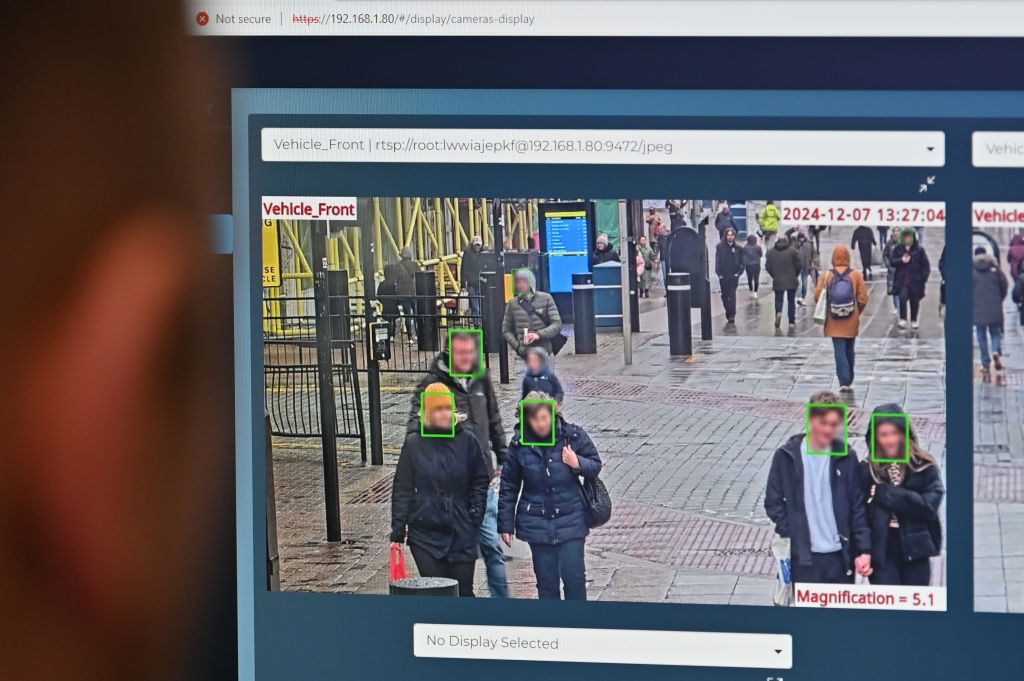
The Global Military Biometrics Market, valued at USD 7.2 billion in 2024, is projected to grow at a CAGR of 6.5%, reaching USD 13.3 billion by 2034. This growth is fueled by increased defense spending and homeland security investments, focusing on secure identity verification. Key drivers include modern warfare tactics, biometric technology integration in military systems, and regulatory shifts towards domestic component development. The market’s expansion is led by fingerprint recognition, dominating with USD 3 billion in 2024, and the U.S. leading regionally at USD 2.6 billion. Emphasis on AI-integrated solutions and modular platforms aims to enhance military operational efficiency and security.
Military Biometrics Market
Military Biometrics Market
Dublin, July 08, 2025 (GLOBE NEWSWIRE) — The “Military Biometrics Market Opportunity, Growth Drivers, Industry Trend Analysis, and Forecast 2025-2034” has been added to ResearchAndMarkets.com’s offering.
The Global Military Biometrics Market was valued at USD 7.2 billion in 2024 and is estimated to grow at a CAGR of 6.5% to reach USD 13.3 billion by 2034.
The market is gaining traction due to rising global defense spending and increasing homeland security investments. With nations focusing on strengthening border control, surveillance, and tactical operations, the demand for secure identity verification tools is surging. Modern warfare and counterterrorism efforts are increasingly relying on biometric technology to provide accurate, real-time identification in both remote and urban environments.
Moreover, the growing emphasis on battlefield digitization and next-generation military communication networks is driving biometric integration into mobile and tactical systems. This includes everything from access control at military installations to personnel authentication in real-time missions. Biometric applications are being extended to wearable combat systems, further enhancing situational awareness and operational efficiency. Governments worldwide are shifting toward technological self-sufficiency, which is further reinforcing investments in military-grade biometric platforms.
Regulatory shifts and strategic sourcing initiatives have accelerated the domestic development of components traditionally imported from other countries. This shift is encouraging innovation, especially in secure authentication systems, although it has led to temporary supply chain adjustments and higher integration costs in the short term. Nevertheless, long-term gains are visible in terms of enhanced reliability, reduced foreign dependence, and improved deployment timelines.
The military biometrics market is segmented based on solutions into hardware and software. In 2024, hardware dominated the segment, generating revenue of USD 4.6 billion. The growing use of rugged and portable biometric hardware, such as handheld fingerprint scanners, multimodal sensors, and compact facial recognition devices, is supporting widespread use in field operations. These systems are designed for fast deployment and function reliably in high-pressure environments like border patrol, tactical checkpoints, and combat zones.
Moreover, biometric hardware is increasingly embedded into next-generation soldier gear, including smart helmets, augmented reality glasses, and secure communication equipment, ensuring seamless access control in mission-critical scenarios. Advancements in sensor technology, including ultra-high-resolution fingerprint readers, infrared facial recognition tools, and long-range iris scanners, are helping defense agencies modernize and strengthen their identity verification infrastructure.
In terms of technology, the market is segmented into fingerprint recognition, facial recognition, iris recognition, voice recognition, and others. The fingerprint recognition segment emerged as the most significant in 2024, accounting for USD 3 billion. This technology remains one of the most dependable and cost-effective biometric tools used by military organizations. It is widely adopted for securing physical access to classified areas, authenticating personnel, and verifying identities in hostile environments. Fingerprint systems are favored for their ease of use, minimal training requirements, and ability to function in rugged, offline conditions. Their operational simplicity and affordability make them particularly useful in both developed and developing regions, including conflict-prone areas where infrastructure may be limited.
Based on end use, the military biometrics market is classified into intelligence agencies, defense forces, homeland security, and private contractors. The defense forces segment held the largest share in 2024, valued at USD 3.9 billion. The growing necessity for advanced identity verification tools and secure access solutions within military installations is driving this segment forward. Biometric technologies are being deployed across secure zones to ensure that only authorized personnel gain access to high-value assets such as weapons systems, surveillance equipment, and communication nodes. Additionally, defense organizations across the globe are investing in modernizing their identification systems to achieve greater interoperability between branches, enabling seamless coordination in joint operations and compliance with international coalition standards.
Regionally, the United States led the military biometrics market in 2024 with a valuation of USD 2.6 billion. This leadership is primarily attributed to its significant defense expenditure and robust adoption of biometric-based systems across military and security operations. The country continues to enhance its biometric infrastructure with large-scale identification systems and edge-based solutions that support mission-critical environments. Domestic innovation and the presence of established defense integrators are also accelerating the deployment of AI-powered biometric platforms. These include systems capable of multimodal verification, biometric encryption, and edge analytics for real-time decision-making across land, air, and cyber domains.
Military organizations are increasingly adopting open-architecture, plug-and-play biometric modules that enhance legacy systems without needing complete overhauls. These modular platforms enable rapid field deployment and offline operation, with seamless synchronization to central command systems once connected. The growing need for scalable biometric solutions that function across various domains – including urban warfare, space operations, and cyber missions – is shaping the evolution of the market. AI-integrated biometric solutions, particularly those utilizing multimodal recognition and secure data transmission, are poised to transform military operations by offering unmatched reliability and speed in identity management.
Comprehensive Market Analysis and Forecast
Industry trends, key growth drivers, challenges, future opportunities, and regulatory landscape
Competitive landscape with Porter’s Five Forces and PESTEL analysis
Market size, segmentation, and regional forecasts
In-depth company profiles, business strategies, financial insights, and SWOT analysis
Key Attributes:
Report Attribute
Details
No. of Pages
180
Forecast Period
2024 – 2034
Estimated Market Value (USD) in 2024
$7.2 Billion
Forecasted Market Value (USD) by 2034
$13.3 Billion
Compound Annual Growth Rate
6.5%
Regions Covered
Global
Market Dynamics
Drivers
Rising global security threats and border control needs
Integration of biometrics in defense modernization programs
Technological advancements in multimodal biometric systems
Growth in military expenditures and homeland security budgets
Deployment in mobile and tactical applications
Challenges
Company Profiles
For more information about this report visit
About ResearchAndMarkets.com ResearchAndMarkets.com is the world’s leading source for international market research reports and market data. We provide you with the latest data on international and regional markets, key industries, the top companies, new products and the latest trends.
Attachment
CONTACT: CONTACT: ResearchAndMarkets.com Laura Wood,Senior Press Manager [email protected] For E.S.T Office Hours Call 1-917-300-0470 For U.S./ CAN Toll Free Call 1-800-526-8630 For GMT Office Hours Call +353-1-416-8900