Feds fund clean energy push for isolated Inuit in Labrador | Spare News
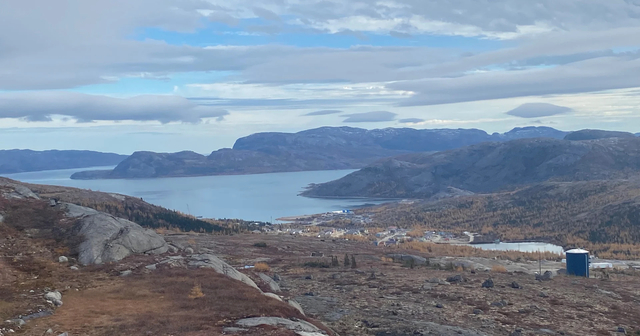
In remote Inuit communities along Labrador’s northern coast, Ottawa is pushing renewable projects forward where power is currently generated primarily by diesel.
The federal government recently announced nearly $22 million for clean energy projects in Labrador. The largest share is for a wind-and-battery system in Nain, a fly-in Inuit community of about 1,200 people at the northernmost end of Nunatsiavut.
For their community, the funding represents a key milestone — one that turns a long-planned project into a buildable one, Jamie Hewlett, regional energy manager with the Nunatsiavut government, told Canada’s National Observer.
“The project just doesn’t happen without that [federal] support,” Hewlett said. “The fact that we’re so far north — logistics alone make it hard to make a project fully viable.”
With the new funding, the Nunatsiavut government will be able to begin construction next summer. The project will include two 1.5-megawatt wind turbines and a battery storage system — supplying most of Nain’s electricity when wind conditions allow. Work on the access roads and turbine foundations is set to begin in 2026 with installation of the turbines planned for 2027. The project is expected to be up and running by the end of 2027 or early 2028.
The federal funding builds on earlier provincial support, including a $3 million contribution from the Newfoundland and Labrador government, and is part of a wider push to cut diesel use in remote communities.
With no connection to the provincial power grid, the community has long relied on diesel generators year-round, with fuel shipped during the short ice-free season and stored on site. In 2022 alone, Nain burned about 2.6 million litres of diesel for electricity, a number expected to drop by more than 60 per cent once the project is up and running.
The funding also supports other Indigenous-led projects in Labrador, including tidal studies near Rigolet and solar installations in Makkovik.
About $424,000 will help expand solar power at community buildings in Makkovik, a coastal Labrador town of about 370 people. With diesel arriving by barge each summer, the town’s isolation drives up electricity costs, which rank among the highest in the province, said Barry Andersen, AngajukKâk (mayor) of Makkovik, who hopes solar energy will help ease the burden.
Electricity rates are subsidized only to a set threshold. Households receive a lower rate up to 1,000 kilowatt hours per month, depending on the season. Once that threshold is exceeded — which Andersen said is common for families using electric appliances — the rate rises to approximately 21.8 cents per kilowatt hour.
“So, anybody who’s using electric heat in their homes really can’t afford it,” Andersen said. “Your hydro bill would be close to $800, $900 a month.”
Existing solar systems reduce diesel consumption by approximately 11,000 litres per year, Andersen said, but output drops significantly from October through March, when daylight hours are shorter.
New federal funding will boost solar capacity in Makkovik, but it won’t be enough to make a big dent in diesel use. Progress is also limited by current utility rules, which restrict solar systems connected to the local grid to a maximum of 100 kilowatts. “If we were allowed to put more up there, we’d generate more power and cut costs,” Andersen said.
Arthur Bledsoe, senior analyst with the Pembina Institute’s renewables in remote communities program, said the announcement signals both progress and uncertainty for remote clean energy development.
Funding helps projects, such as Nain’s, move forward and shows the federal government understands the financial and technical challenges communities face in moving away from diesel. But while announcements like this point to the value of clean energy, it’s still unclear whether that support will last, Bledsoe added.
He noted several federal programs — including those that helped fund the Nain project — are currently frozen, with no new applications being accepted and no clarity about how federal budget cuts could affect them.
Bledsoe said demand for funding already exceeds what’s available, as more communities try to launch their own clean energy projects. Even when funding is approved, tight timelines often don’t match with the realities of building in remote areas with short construction seasons and high costs. If these programs are cut or scaled back, Bledsoe said, many communities could be left behind the rest of Canada on clean energy usage.
“With this in mind, the government really needs to keep doing what it’s been doing and maintain stability and longevity in its programming, so communities can have a reliable partner,” Bledsoe said.
Sonal Gupta / Local Journalism Initiative / Canada’s National Observer.
link