Charging ahead: Estevan powers up education and energy connections – DiscoverEstevan.com
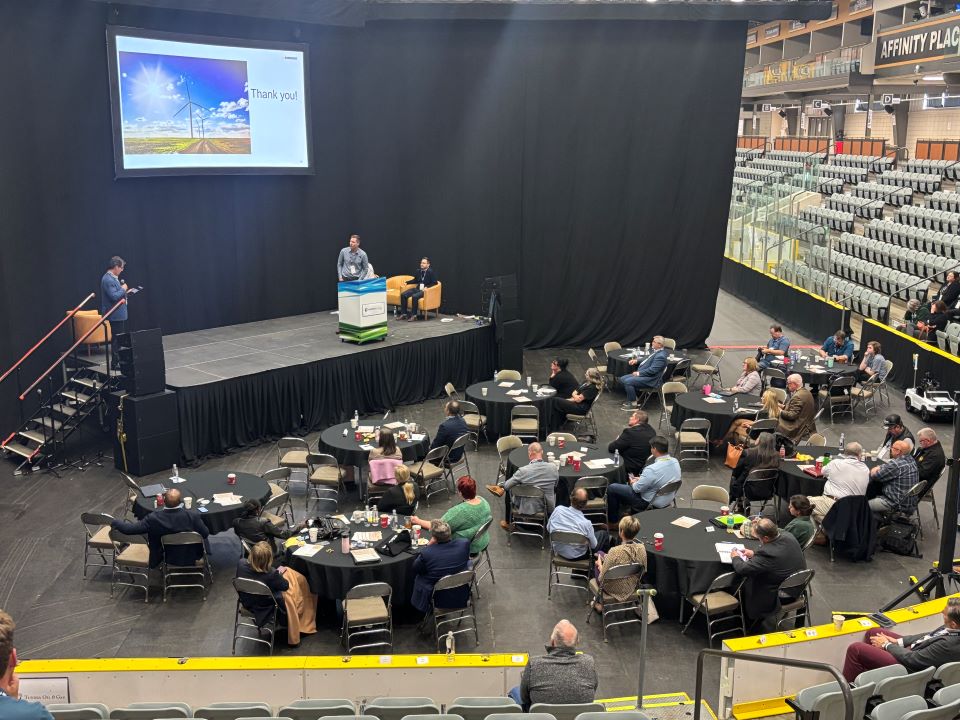
Estevan is seeing new connections between education and the energy industry thanks to the ICED Rural Conference, where local leaders, students, and education partners gathered to showcase opportunities and innovations in technology, energy, and education. The conference highlighted the region’s potential for workforce development, technology-driven solutions, and sustainable energy practices.
Becca Foord – Community Development Officer, Southeast Tech Hub
Becca Foord, Community Development Officer and interim chair of the Southeast Tech Hub board, reflected on how the conference has grown to become a cornerstone for local innovation and collaboration. “In 2020, a study showed it would be beneficial to create a rural tech hub and focus on innovation and diversifying our economy. Our board took that idea and ran with it, opening the tech hub. Gord Moore stepped in as executive director, and it has grown into something incredible. Here we are today at the second ICED Rural Conference, and it’s amazing to see the progress over five years,” Foord said.
Foord emphasized that the conference serves as a bridge between the community, educators, and the energy industry. “We were working on these exciting initiatives behind the scenes while still trying to keep the power plant operational. Now, there’s a really positive outlook, and people are seeing the benefits of continuing to pursue these opportunities. The conference allows us to demonstrate what’s possible when industry, education, and community come together. Estevan is a great place to work and live, and this event showcases what we can accomplish when we invest in our future,” she said.
She also highlighted the broader economic impact of the conference. “By connecting students, entrepreneurs, and energy sector representatives, we’re creating pathways for local innovation and long-term community growth. It’s not just about technology, it’s about fostering the skills and networks necessary for a resilient economy.”
Alistair Watson – Southeast College Student
Alistair Watson, a student at Southeast College, presented a hands-on project that illustrated how the conference engages students in real-world applications of technology. He showcased a modified robot named Poppy, which he and his classmates developed using 3D printing and mobility enhancements. “We gave Poppy some mobility with a modified Jeep and added covers after removing the windows. Most of the pieces on the flag are 3D printed, and some screw on and off,” Watson explained.
He discussed the collaborative effort behind the project, noting that the work required careful planning, experimentation, and teamwork. “This project took a couple of weeks to complete. Ryan led most of the work, but everyone contributed. Presenting it at the conference was a chance to share our problem-solving process and show what hands-on learning can achieve,” he said.
Watson also reflected on the value of student participation in the conference. “All my fellow students gave great presentations, showing what they accomplished. It was a wonderful opportunity for everyone. Events like this help students connect with industry leaders, see potential career paths, and understand the real-world impact of their studies. I’m excited for future courses and projects and to see the conference continue to grow,” he added.
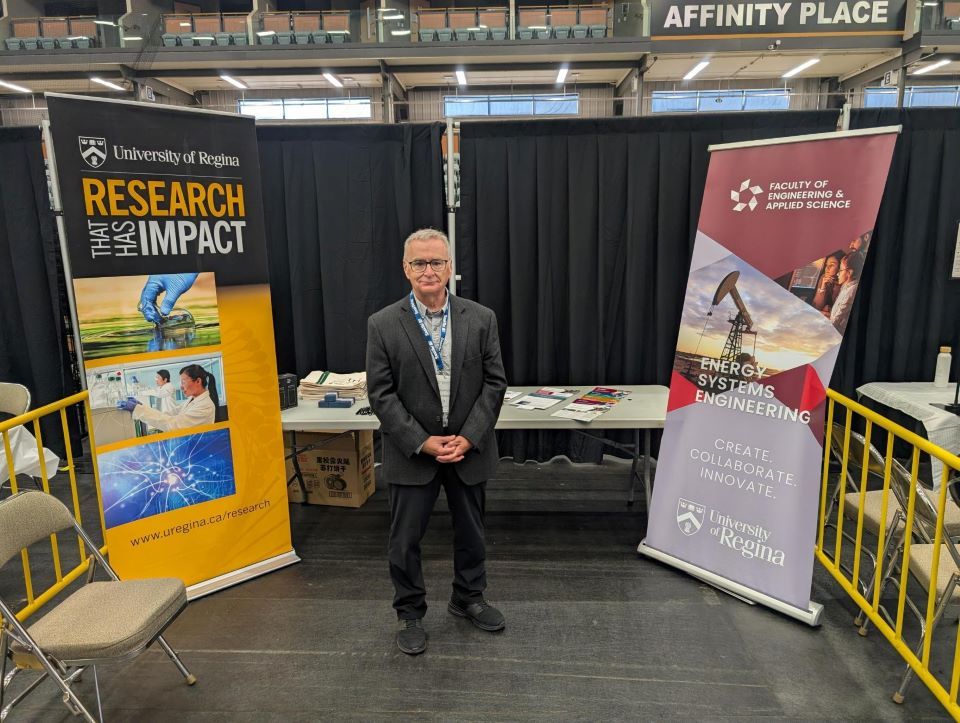
Raymond Deschamps – Senior Advisor to VP Research, University of Regina
Raymond Deschamps highlighted the University of Regina’s commitment to supporting local education and energy programs through partnerships with Southeast College and the Southeast Tech Hub. “With Southeast College, we’ve collaborated on courses and offerings. For example, this fall, students can enroll in an introductory nuclear course through our continuing education division, taught by one of our professors at the University of Regina,” Deschamps explained.
He discussed how the university helps bridge the gap between academia and local industry. “Sometimes when Gordon and Tanya connect with a startup, we provide research support. This collaboration allows us to apply academic knowledge to practical problems, while startups gain access to expertise and resources they might not otherwise have. It’s a win-win for the university, the community, and the regional economy,” he said.
Deschamps also emphasized the role of research in workforce development. “By partnering with local colleges and tech hubs, the university helps prepare students for careers in energy, technology, and research. Programs like these give students hands-on experience and connect them to the people and resources shaping the future of Southeast Saskatchewan,” he added.
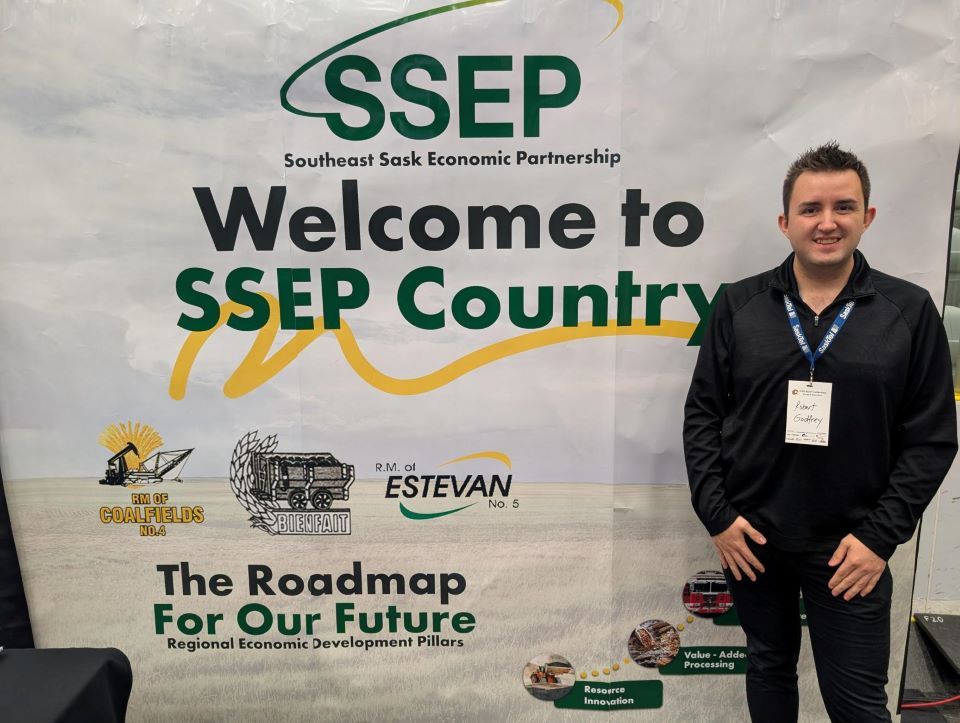
Robert Godfrey – Saskatchewan Southeast Energy Project (SSEP)
Robert Godfrey underscored the conference’s role in connecting residents to careers in the energy sector. “This event shows local people the industries they can enter and the educational pathways available, whether it’s in energy development, technology, or research,” he said.
He highlighted how the conference fosters networking, skill development, and long-term workforce planning. “Attendees can meet representatives from energy companies, learn about career opportunities, and understand what training and education are required. This is especially important in Southeast Saskatchewan, where the energy sector has a major impact on the local economy. The conference also helps companies identify future talent, ensuring a skilled workforce for years to come,” Godfrey added.
Dr. Arthur Situm – Professor, University of Regina & Canada Research Chair in Small Modular Reactor Safety and Licensing
Dr. Arthur Situm offered insights on advanced nuclear technology and small modular reactors (SMRs), emphasizing their potential to transform energy production in rural and remote areas. “Saskatchewan is exploring advanced reactors, such as microreactors, for remote industrial sites. These reactors generate high-temperature heat, around 750 degrees Celsius, suitable for powering industrial operations without relying on diesel,” Situm explained.
He discussed the innovative heat pipe technology used in these reactors. “Instead of traditional water-cooling systems, microreactors use heat pipes, similar to the technology in an iPhone, allowing natural circulation of the coolant. This makes the reactors highly efficient and reduces the complexity of the system,” Situm said.
Situm also emphasized the economic and environmental value of SMRs. “The primary benefit is providing low-carbon energy in locations that are off the main grid, such as mining or industrial sites. These reactors complement renewable energy, reduce reliance on fossil fuels, and support local energy independence. They also create jobs in the community, from plant operation to maintenance,” he added.
He further addressed the global context of nuclear energy. “Countries like Russia and China are rapidly exporting reactors worldwide. By investing in SMR technology and building expertise here, Saskatchewan and Canada can ensure they remain competitive in the international energy market while pursuing a clean energy future.”
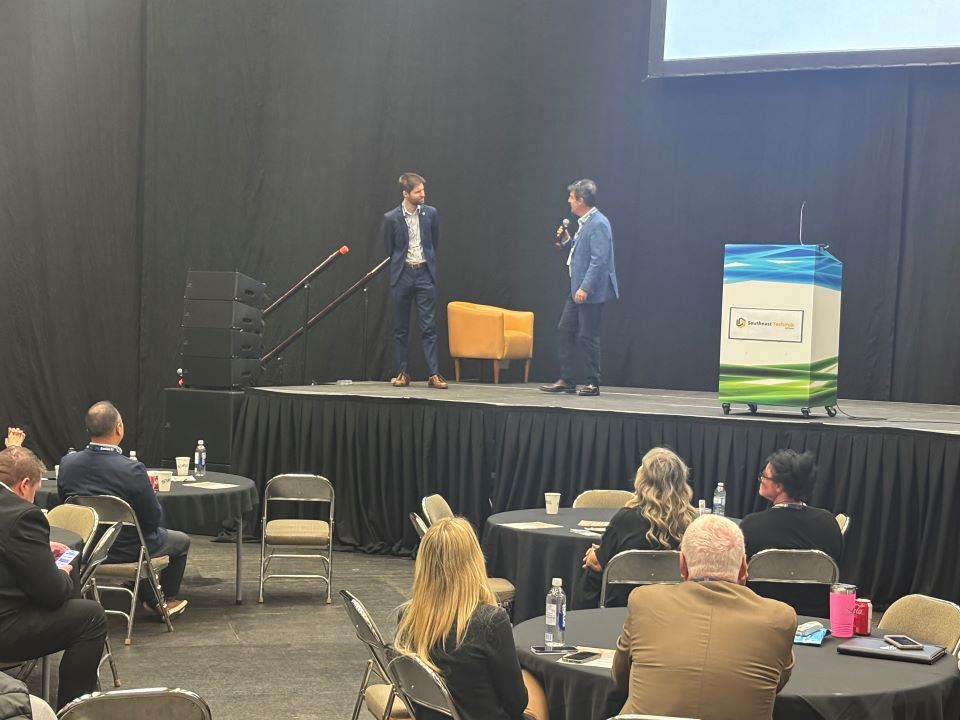
Jason – Project Lead, Mixed Reality Capture Studio, Durham College
Jason, representing Durham College’s Mixed Reality Capture Studio, introduced how immersive technologies like virtual reality are shaping the future of training. “We were invited by the Southeast Tech Hub, really just to explore how different technologies could be used for training, simulation, and construction of different areas,” Jason explained.
The studio develops software for VR and XR platforms, helping companies adopt training solutions tailored to their workforce needs. “We really just try to focus on company needs, what their challenges are, and how different technologies or trainings can improve their overall workflow,” Jason said. He noted that the goal is to create hybrid training approaches that combine in-person and virtual elements, streamlining workforce development.
Jason also shared how exciting it was to see Saskatchewan’s rural communities hosting a tech-focused event. “Coming from Ontario, it’s been really exciting to see the rural community get together and see how the different community partners come and speak to their different challenges. I think there’s a really good opportunity to see how Canadians in general can share connections, communication, and knowledge to better the Canadian economy,” he said.
Conference Takeaways
The ICED Rural Conference in Estevan highlighted the growing connection between education, technology, and energy. From student innovation projects to advanced nuclear research, the event demonstrated the region’s commitment to workforce development, sustainable energy, and community growth. Attendees left with insights on career pathways, technological innovation, and the role of education in supporting Southeast Saskatchewan’s future.
More details will be up on Discover Estevan as the conference progresses.
link