Emerging biometrics and PAD concerns, VCs front and center as MOSIP evolves
Biometrics and innovations in digital identity technology, most notably verifiable credentials, have taken the spotlight in many sessions of MOSIP Connect 2026 through the first two days.
Day 2 began with keynotes, including from Nigeria NIMC DG and CEO Engr. Bisoye Coker-Odusote on her country’s transition to NIMS 2.0. Dr. Pramod Varma addressed the prominent role of verifiable credentials in contemporary identity systems – and beyond – in a video address. Vinicius de Faria Silva of Brazil’s Ministry of Management and Innovation in Public Services spoke about how Brazil’s adoption of Inji and VCs was inspired by presentations at a previous edition of MOSIP Connect.
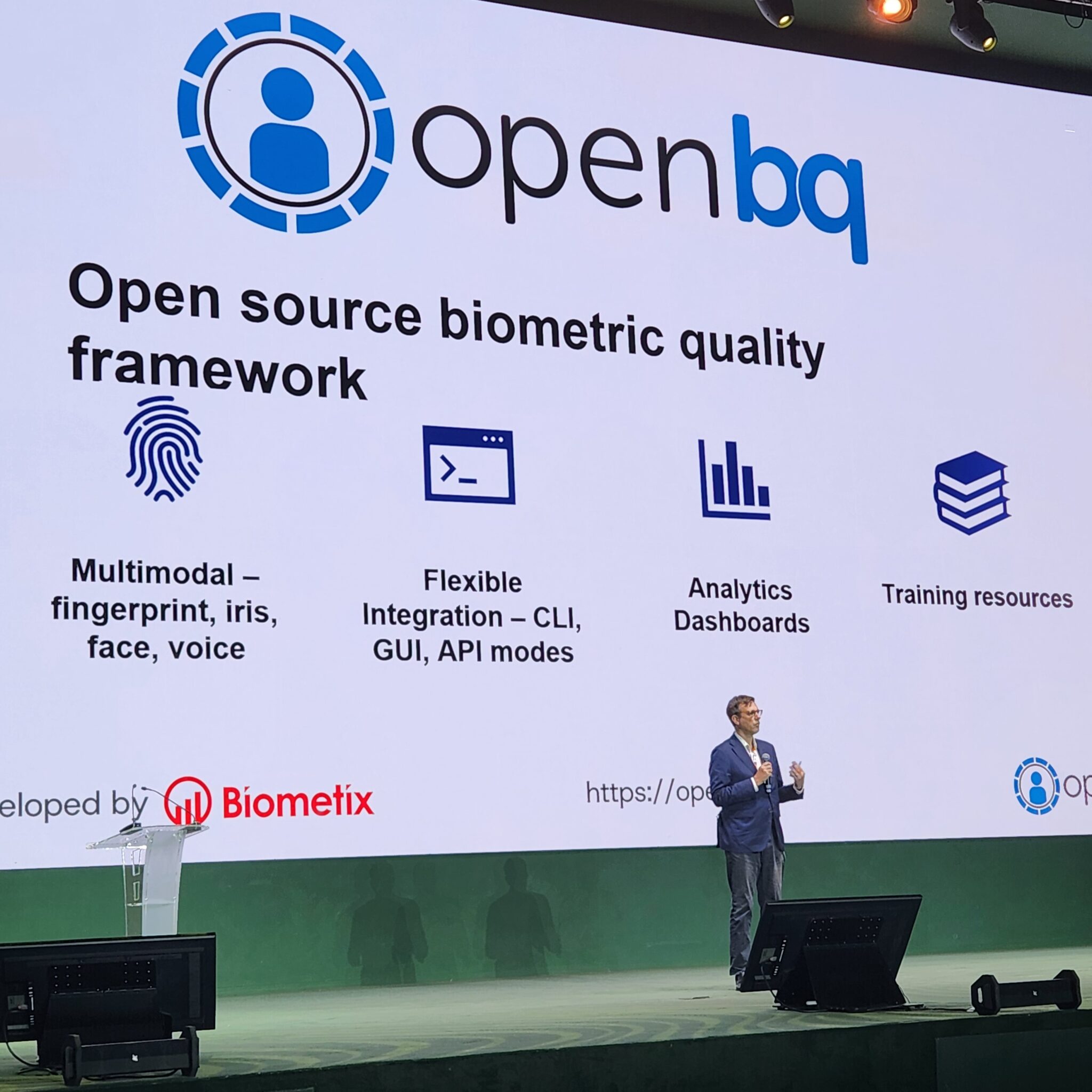
The BQAT tool for biometric data quality investigation has been integrated with MOSIP as OpenBQ, MOSIP CTO Ramesh Narayanan and Biometrics Institute and BixeLab Founder Ted Dunstone announced during a morning keynote. The tool was presented in detail during an afternoon workshop along with the biometric data quality control experience of Ethiopia’s NIDP (see below).
MSU Professor Arun Ross delivered a keynote on building robust biometric systems. He noted the importance of considering intra-user variations, inter-user similarities, noisy data and non-universality, such as users whose fingerprints captured are consistently poor quality. Aging, presentation attacks, deepfakes, morph attacks must also be taken into account when building the system.
Ross notes recent developments in infant fingerprinting, LLMs for explainability and synthetic biometrics data.
Ecosystem innovation
The rest of the morning sessions were dedicated to innovations in last-mile financial inclusion by MIFOS, the advances and forthcoming version of OpenCRVS, data exchange orchestration as a DPG by OpenFN and a review of OpenG2P.
The second edition of the MOSIP Create initiative for market-ready solutions was held with the themes of service access, eKYC for inclusive IDV, digital identity for financial inclusion and credential facilitation for empowerment.
There are eight winners of MOSIP Create 2026: VSOneWorld and Asthra Health Tech for continuity of healthcare; Ooru (twice) for fast issuance of ISO-compliant mobile driver’s licenses (mDLs) and turning legacy documents into VCs; Educerts for financial aid distribution; ECS for educational credentials; Xnterprise Consultancy Services for connecting government systems to deliver digitally signed documents to a digital wallet; and Tech5 for its OmniTrust platform, which back Ethiopia’s FaydaPass.
They were chosen from among 75 submitted ideas and more than 25 completed solutions. Fifteen of those were evaluated as finalists, all of which scored between 60 and 80 in an assessment by MOSIP’s adjudication committee.
The discussions on biometrics within the MOSIP ecosystem on Day 2 built on multiple sessions held on Day 1.
Biometrics considerations for MOSIP
A panel on resource planning choices that can reduce overhead and long-term costs of biometric ID systems was held on Wednesday afternoon, featuring Anshul Pachouri, senior manager at Microsave Consulting, BioRugged CEO Arnd Langguth, Neurotechnology Business Development Director Antonello Mincone, and moderator Sanjith Sundaram of MOSIP.
Pachouri noted the prohibitive cost of both issuing electronic ID cards at scale for many governments, along with the readers they require for businesses.
Biometric enrollment kits are evolving, but Langguth suggested the big advantage traditional enrollment kits retain is the inclusion of 4-4-2 fingerprint scanners.
The session ended with a call for collaboration on fit-for-scale digital identity system for small states.
Another panel on biometric presentation attack detection followed, moderated by Dunstone.
Digvijay Singh Kanwar of Next Biometrics, Jay Meier of FaceTec, MSU and CITeR’s Ross, Henrik Winberg of Precise Biometrics and Dr. Roberto Levya Fernandez of ATI discussed the kinds of PAD attacks MOSIP systems are likely to face, and considerations for the MOSIP working group formulating guidance for protecting them.
Tests of PAD systems are only effective in so far as they reflect the effectiveness of the technology at protecting against attacks it has not been specifically trained for, so testing requirements and standards must not be overly proscriptive and specific, Meier points out.
Iris biometrics are not as frequently spoofed, due to their primary use as an enrollment and verification factor rather than for authentication, and the specialized equipment involved. Ross points out that a research project carried out with IARPA showed that contact lenses can present a challenge for iris biometrics.
On Thursday afternoon, a workshop on ensuring biometric data quality presented the experiences of Ethiopia’s NIDP, along with OpenBQ and MACP. The presentation illustrated the many challenges that enrollment programs face on the topic, from false matches of poor quality fingerprints with other low-quality prints to handling exceptions in a way that does not allow operators too much leeway to skip biometrics capture in difficult cases. But it also showed a way to minimize those kinds of challenges, between the integration of BQAT with MOSIP and the organization’s device certification program.
A discussion on new modalities like voice and contactless fingerprint biometrics, and other emerging technologies like infant biometrics, was held by Kaizen Voiz’ Vivek Kumar, Turant’s Anurag Goel, Simprints’ Jonathan Smith, Identy’s Anthony Vendhan and Tech5’s Shankar Bhat.
Government stakeholders, biometrics vendors, DPG developers and other stakeholders covered a wide range of digital identity issues beyond the above in other workshops, panel talks, demos and side-conversations throughout the day. Biometric Update’s coverage from live on location in Rabat will highlight more of those discussions as the event continues, and in follow-up coverage in the weeks ahead.
Article Topics
Biometric Quality Assessment Tool (BQAT) | BixeLab | MOSIP (Modular Open Source Identity Platform) | MOSIP Connect 2026 | OpenBQ | presentation attack detection | verifiable credentials
link