Feds, province to spend $3B on mini nuclear power plant in Bowmanville, Ont.
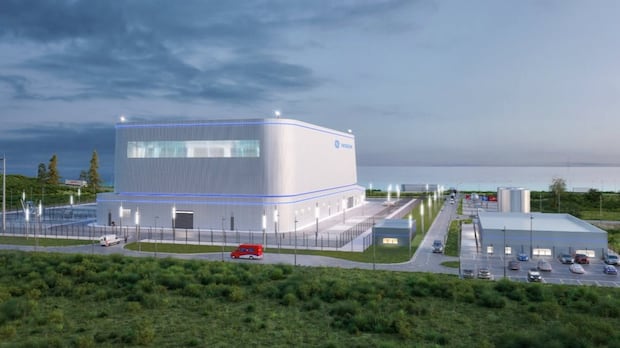
Ontario and the federal government are spending a collective $3 billion to build Canada’s first small modular reactors, a new nuclear energy technology to be built next door to the Darlington power plant.
Prime Minister Mark Carney, who joined Premier Doug Ford in Bowmanville Thursday to announce the new spending, said he has added the Darlington New Nuclear Project to his list of projects deemed to be in the national interest and therefore worthy of fast-tracking.
To help build the first of four small modular reactors (SMRs) next to Darlington Nuclear Station, the province will spend $1 billion through the Building Ontario Fund, while Ottawa will spend $2 billion through the Canada Growth Fund, Carney said.
“We are an energy superpower, and we are only getting stronger. This project will make us the first in the G7 to have an entirely new kind of nuclear reactor,” he said. “[It is] a generational investment, an investment that will extend Canada’s world leadership in clean energy.”

Small modular nuclear reactors are being touted as a key piece of the future of clean energy and construction is now underway in Ontario on the first of its kind in the G7. For The National, CBC’s Susan Ormiston breaks down what’s behind the hype and why some say Canada should proceed with caution.
Earlier this year, the Ford government gave Ontario Power Generation (OPG) the green light to start construction on the project’s first small modular reactor (SMR). The total project cost was announced at the time as $20.9 billion, with the estimated construction cost of the initial reactor being $7.7 billion.
When completed, the four SMRs will produce 1,200 megawatts of electricity, or enough to power 1.2 million homes, Carney said.
The province’s electricity system operator recently estimated that demand for power across Ontario is set to increase 75 per cent by 2050.
Ford says project is ‘investment our province needs’
Ford told reporters the project will make Ontario’s economy more competitive, resilient and self-reliant in the face of U.S. tariffs.
The project will create 18,000 jobs during construction and sustain 3,700 jobs annually over the next 65 years, he said. Ford stressed that the province is also “using Ontario products at every opportunity so that Ontario tax dollars support Ontario workers.”
“With tariffs and economic uncertainty hammering Ontario’s workers and businesses, this is exactly the sort of investment our province needs,” he said, adding that his government is also looking to expand Ontario’s nuclear energy capacity in other parts of the province.
Carney said the SMRs will inject $500 million annually into the Canadian supply chain, while construction, operation and maintenance of the four units will add more than $38 billion to Canada’s GDP over the next 65 years.
SMR construction already underway
When the project was announced earlier this year, no taxpayer money was allotted to build the project. It was announced then that OPG would finance the construction cost through a combination of cash on hand and taking on debt, recovering the cost over the lifetime of the project by charging ratepayers for electricity.
The Canadian Nuclear Safety Commission granted OPG a licence to construct the first of the four SMRs earlier this year. Work started in May and it is expected to come online in 2030, according to the province.
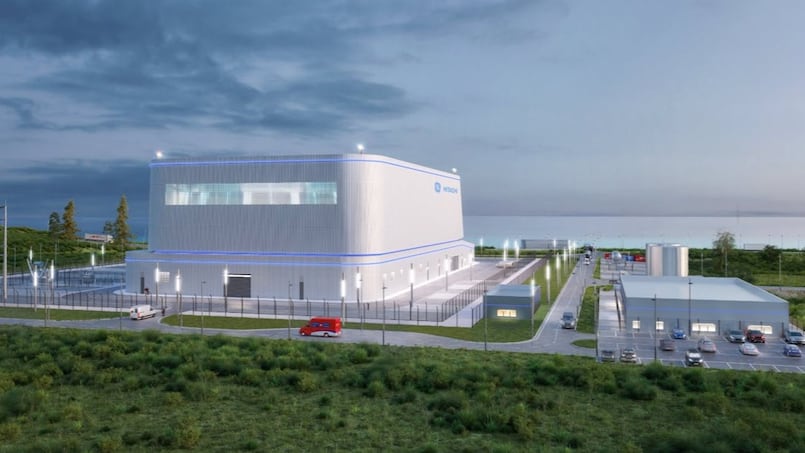
In a briefing earlier this year, Ministry of Energy and Mines officials told reporters that roughly 80 per cent of the SMR project spending will go to Ontario companies, another 15 per cent to European and Asian firms, and just five per cent to companies in the U.S., primarily for GE Hitachi’s design and development of the power plant model, called the BWRX-300.
Ontario would become the first place in the world to build the BWRX-300, which is a smaller version of GE Hitachi’s existing boiling water reactor technology.
link