Inside the P.E.I. energy systems plant, converting waste to energy | Spare News
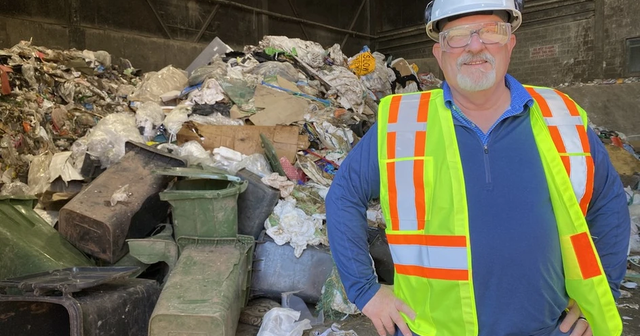
The P.E.I. Energy Systems facility has saved more than 300 million litres of fuel oil and 1.6 million cubic meters of landfill space — enough to fill the equivalent of 89 football fields 10 meters deep — over its 40 years of operation in Charlottetown.
David Godkin, general manager of Enwave’s facility in Charlottetown, says the P.E.I. Energy Systems plant also produces electricity for its internal use and can provide enough energy on the grid to power about 65 small family homes for a year.
The plant uses municipal waste, wood and light oil to produce and distribute hot water and steam thermal energy for more than 145 buildings in the city.
On May 27, Godkin gave The Guardian a tour around the P.E.I. Energy Systems facility.
Processing waste and creating thermal energy locally allows P.E.I. to displace imported oil and reduces greenhouse gases, he said.
“It significantly reduces the amount of landfill space that is required on an Island where space is limited,” Godkin said.
The plant plays a key role in the Island’s waste management strategy by diverting residual black cart waste, Godkin said.
“Roadside waste collection is delivered to the plant for processing, where it is received and stored on the receiving floor. Operators then mix the waste to achieve a consistent energy content suitable for combustion,” he said.
The composition of the black cart waste that arrives at P.E.I. Energy Systems facility demonstrates that Islanders generally support and follow the Waste Watch program when it comes to sorting, Godkin said, though the plant does have the ability to further separate the contents.
“While the plant was built years ago to accept mixed waste, adjustments have been made so that it presently anticipates and handles sorted residual waste materials after the compostable, recyclable, and other ‘special disposal’ items have been separated out,” he said.
The waste is then fed into three combustion units on a timed basis to maintain control over the secondary combustion temperature, Godkin said.
“This process, known as two-stage starved-air combustion, involves both a primary and secondary combustion zone,” he said.
Hot gases from the secondary combustion chambers are ducted to a heat recovery boiler, which generates high-pressure steam.
Godkin said that the steam is used to produce electricity and hot water and can also be sent directly to the Queen Elizabeth Hospital for use in heating, cooling, domestic hot water and sterilization.
“After passing through the heat recovery system, the gases are further cooled via two economizers before entering the flue gas treatment system,” he said.
Enwave has recently announced plans to expand, constructing a new plant that will be capable of processing up to 49,000 tonnes of waste. That’s almost twice the capacity of the existing plant, Godkin said.
“The plant will include a new combustion system with improved efficiency and heat recovery, as well as a new emissions control system,” he said.
The new plant will also generate high-pressure steam for electricity, hot water for district heating, and steam for the QEH, providing up to 85 per cent of the fuel input requirements of the system, Godkin added.
“The new plant will be a showcase for waste-to-energy and district energy in Canada,” he said.
The facility is set to be in operation by 2028.
- For more than 40 years of operation, the P.E.I. Energy Systems facility has prevented approximately 500,000 tonnes of carbon dioxide from being emitted.
Yutaro Sasaki is a Local Journalism Initiative reporter, a position funded by the federal government. He can be reached by email at [email protected].
The Canadian Press. All rights reserved.
link