NASA Aims to Fly First Quantum Sensor for Gravity Measurements

QGGPf will use two clouds of ultra-cold rubidium atoms as test masses. Cooled to a temperature near absolute zero, the particles in these clouds behave like waves. The quantum gravity gradiometer will measure the difference in acceleration between these matter waves to locate gravitational anomalies.
Using clouds of ultra-cold atoms as test masses is ideal for ensuring that space-based gravity measurements remain accurate over long periods of time, explained Sheng-wey Chiow, an experimental physicist at JPL. “With atoms, I can guarantee that every measurement will be the same. We are less sensitive to environmental effects.”
Using atoms as test masses also makes it possible to measure gravity with a compact instrument aboard a single spacecraft. QGGPf will be around 0.3 cubic yards (0.25 cubic meters) in volume and weigh only about 275 pounds (125 kilograms), smaller and lighter than traditional space-based gravity instruments.
Quantum sensors also have the potential for increased sensitivity. By some estimates, a science-grade quantum gravity gradiometer instrument could be as much as 10 times more sensitive at measuring gravity than classical sensors.
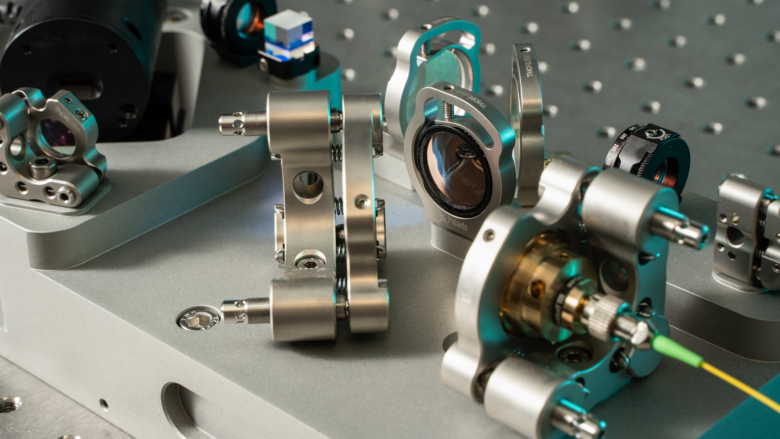
The main purpose of this technology validation mission, scheduled to launch near the end of the decade, will be to test a collection of novel technologies for manipulating interactions between light and matter at the atomic scale.
“No one has tried to fly one of these instruments yet,” said Ben Stray, a postdoctoral researcher at JPL. “We need to fly it so that we can figure out how well it will operate, and that will allow us to not only advance the quantum gravity gradiometer, but also quantum technology in general.”
This technology development project involves significant collaborations between NASA and small businesses. The team at JPL is working with AOSense and Infleqtion to advance the sensor head technology, while NASA’s Goddard Space Flight Center in Greenbelt, Maryland is working with Vector Atomic to advance the laser optical system.
Ultimately, the innovations achieved during this pathfinder mission could enhance our ability to study Earth, and our ability to understand distant planets and the role gravity plays in shaping the cosmos. “The QGGPf instrument will lead to planetary science applications and fundamental physics applications,” said Hyon.
To learn more about ESTO visit:
link