New U.S. policy to photograph all travellers at border not necessary for Canadians, immigration lawyer says


Listen to this article
Estimated 3 minutes
The audio version of this article is generated by text-to-speech, a technology based on artificial intelligence.
A new U.S. regulation that aims to take photographs of all travellers at the border isn’t necessary for Canadians, according to an American immigration lawyer who practises law in both countries.
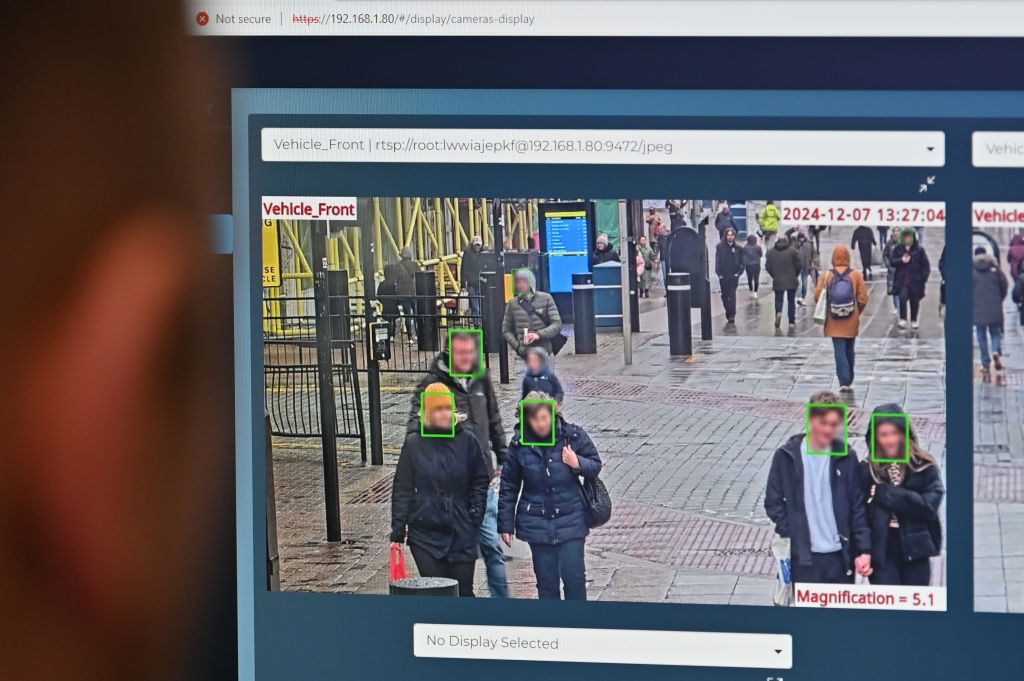
The U.S. Department of Homeland Security (DHS) says that it’s expanding the use of facial biometric technology at all border crossings in the coming years.
U.S. Customs and Border Protection (CBP) officers plan to take facial photos of every traveler entering and exiting the country “to match records of aliens,” said Hilton Beckham, CBP assistant commissioner for public affairs.
“I think the system works as it is. I don’t think it’s needed,” said Stuart Friedman, a U.S. immigration lawyer who also practises law in Canada.
Friedman points to a 2011 agreement by former president Barack Obama and former prime minister Stephen Harper known as Beyond the Border: A Shared Vision for Perimeter Security and Economic Competitiveness.
Under that declaration, law enforcement agencies on both sides of the border have been sharing information to help “prevent criminals and terrorists from exploiting legitimate trade and travel,” according to a DHS fact sheet.
“Part of the trade off for the easy border was that you would give us so much information and you are,” said Friedman. “I don’t know that it’s really needed [for Canadians]. I think it’s an acceptable risk.”

The U.S. government plans to expand its facial biometrics program with the capability of taking photographs of all non-U.S. citizens who enter and exit the country. One immigration lawyer says that’s not necessary for all Canadians. The CBC’s Jason Viau explains.
At the same time, Friedman admits the new policy “does serve a valid purpose” by reducing fraud and allowing the U.S. government to keep better tabs on the movement of non-citizens.
The updated rule comes into effect Dec. 26, but officials say it will be fully implemented at land border crossings some time in 2026.
It will expand over the next three to five years at seaports and airports.
The U.S. government said it’s been using the biometric facial technology since 2004 for “certain aliens arriving in the United States.”
But the CBP didn’t answer questions from CBC News about how this will work at land border crossings for travellers who enter and exit, especially at border crossings where space is limited.
“Imagine a car with four people and everybody having to get out and having to get back in, both coming and going,” said Friedman. “Our border crossings in Detroit were built in the 1920s. They do not have a great deal of space.”
Most of Friedman’s clients are Canadian and he’s increasingly had to make a trip here to meet with them “simply because they’re afraid to come to the U.S. for meetings.”
“What used to be one of the friendliest borders in the world has turned into a place that a lot of people are scared of crossing,” said Friedman.
Global Affairs Canada said it is aware of the American amendment to the DHS regulation that could require all non-U.S. citizens to be photographed at the border.
Prior to this, a spokesperson said facial recognition technology was already mentioned in its travel advisory to the U.S.
“Each country decides who enters its borders and the Government of Canada cannot intervene on behalf of travellers who do not meet the entry requirements of another country,” said Thida Ith, a Global Affairs Canada spokesperson.
link