Say goodbye to GPS – MagNav with its Q-CTRL quantum technology could make it obsolete

Thanks to MagNav, a breakthrough developed by Australian company Q-CTRL, a world without satellite dependency is moving from sci-fi to science fact. Using quantum sensors and the Earth’s natural magnetic field as its guide, MagNav not only dodges interference but also crushes traditional backup systems, clocking in up to 50 times more accurate. In short: GPS, your replacement has entered the chat.
While we’re busy cursing our phones when they lose GPS signal inside a parking garage, Q-CTRL’s MagNav is out here navigating through storms, tunnels, and magnetic chaos without breaking a sweat. Powered by cutting-edge quantum tech and real-time learning algorithms, this system reads the magnetic “fingerprint” of the Earth itself — no satellites, no waiting for recalculations, and no dropped pins in the middle of nowhere.
Why GPS isn’t as bulletproof as you think
Most of us take GPS for granted until the moment it fails — then suddenly, you’re that person driving in circles because the map froze three turns ago (or lost in a crowd, unable to find your group of friends despite sharing both your GPS locations). Tunnels, heavy storms, tall buildings, remote areas or even too many devices concentrated densely in an area can all throw GPS off. And in critical settings like aviation, military operations, or emergency rescues, losing positioning isn’t just annoying, it’s downright dangerous.
Relying purely on satellites always carried risks. Those delicate signals beaming from thousands of miles above? They can be jammed, spoofed, or blocked by a stubborn mountain range. When the stakes are high, trusting your location to a satellite alone starts to look a little shaky.
MagNav flips the script on navigation
Here’s where MagNav rewrites the playbook. Instead of chasing satellite signals, MagNav looks down — not up. It taps into the Earth’s magnetic field, reading its natural wobbles and quirks like an invisible map that’s been right under our noses all along.
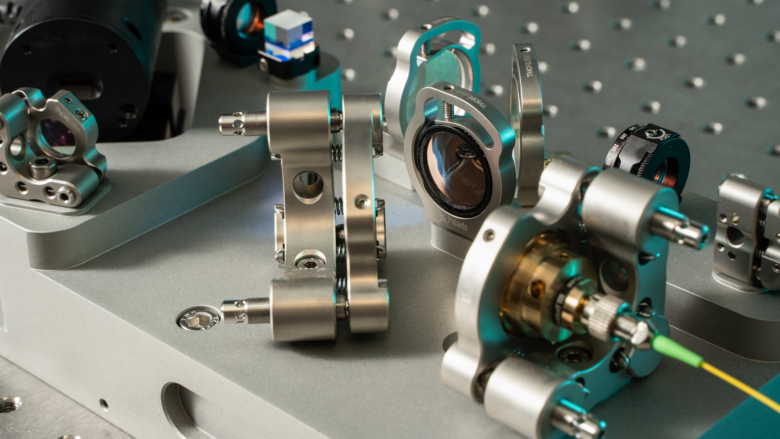
At the heart of the system are quantum rubidium magnetometers, tiny sensors that can pick up minute shifts in magnetic fields with mind-blowing sensitivity. These sensors work together with smart algorithms that adjust on the fly, meaning MagNav isn’t fooled by engine vibrations, metal structures, or even the magnetic quirks of the vehicle itself.
While traditional GPS is busy arguing with clouds and skyscrapers, MagNav simply listens to the Earth’s own signals — and trust us, the planet doesn’t drop calls.
How it all works (without melting your brain)
In simple terms:
- MagNav’s sensors detect local magnetic patterns, which vary slightly depending on geography.
- It instantly matches those readings against highly detailed magnetic maps.
- It figures out exactly where it is, without needing satellites or external signals.
And it gets better: MagNav’s learning algorithms can adapt to the vehicle they’re in. No need to run special calibration maneuvers — the system figures things out on the fly. Think of it as GPS with street smarts, always adjusting without nagging you to make a U-turn.
During testing, MagNav didn’t just perform well — it shattered expectations, achieving positioning precision that made even top-notch inertial systems look clumsy by comparison.
To prove it wasn’t just a cool lab trick, the Q-CTRL team strapped MagNav onto a Cessna airplane and took it on a 6,700-kilometer flight across different terrains and altitudes. The result? An average positioning error of only 22 meters — which is tiny considering the scale of the trip. That’s an error margin of just 0.006%.
Even more impressive, MagNav stayed accurate in rough conditions: high altitudes, magnetic interference, turbulent air. In the air, externally mounted sensors achieved accuracy 46 times better than top inertial systems; even sensors installed inside the plane managed improvements of 11 to 38 times.
On the ground, MagNav kept flexing its muscles. Testing on paved and gravel roads in rural Australia, it delivered ground positioning 7 times better than traditional inertial systems — and it did it without fancy shock absorbers or noise isolation.
Are there any bumps in the road?
The system relies on accurate magnetic maps to work its magic. In areas like the open ocean, where detailed magnetic mapping is sparse, it might struggle. Also, space weather — like solar storms — can temporarily mess with the Earth’s magnetic field, although MagNav’s algorithms are smart enough to catch and adjust for these hiccups.
Still, these challenges are manageable compared to GPS’s vulnerabilities. Plus, the Q-CTRL team envisions combining MagNav with other tech like radar or visual navigation for even stronger resilience in the future.
link