U.S. Automotive Biometric Market Size
U.S. Automotive Biometric Market Trends
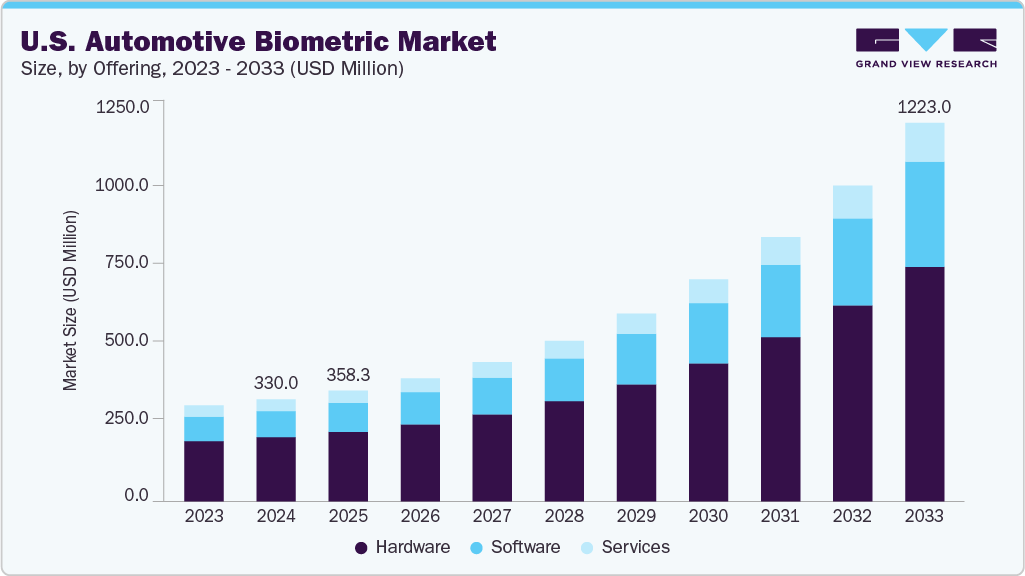
The U.S. automotive biometric market size was estimated at USD 330.0 million in 2024, and is projected to reach USD 1,223.0 million by 2033, growing at a CAGR of 16.6% from 2025 to 2033. The market is gaining momentum, driven by rising demand for enhanced vehicle security through biometric authentication methods such as fingerprint and facial recognition,
Key Market Trends & Insights
- The U.S. automotive biometric market accounted for a 78.5% share of the North America automotive biometric market in 2024.
- By technology, the fingerprint recognition segment accounted for the largest share of 35.7% in 2024.
- By component, the hardware segment held the largest market share in 2024.
- By application, the vehicle access control segment dominated the market in 2024.
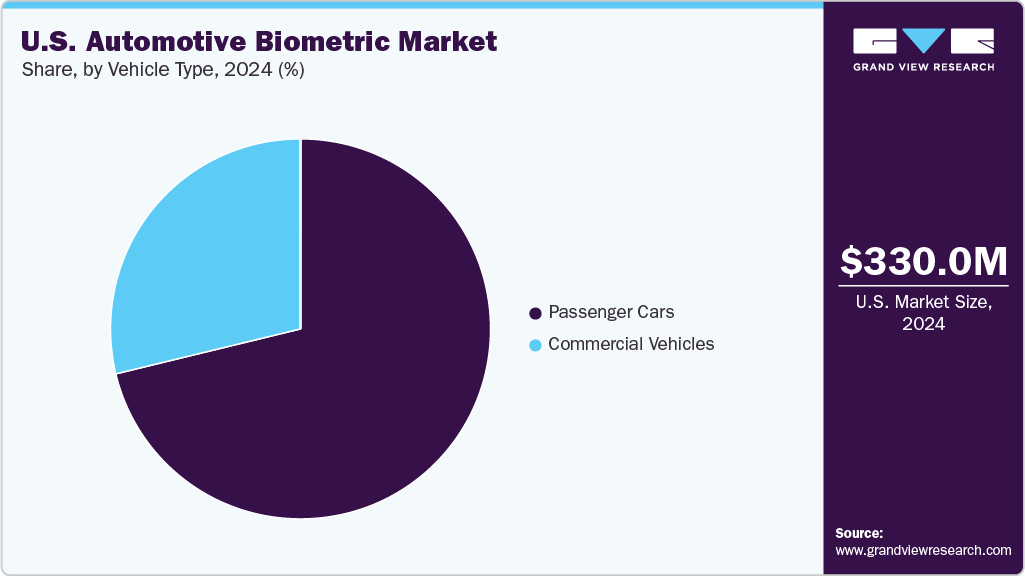
- By vehicle type, the passenger cars segment dominated the market in 2024.
Market Size & Forecast
- 2024 Market Size: USD 330.0 Million
- 2033 Projected Market Size: USD 1,223.0 Million
- CAGR (2025-2033): 16.6%
In response to growing vehicle theft and safety concerns. Increasing integration of biometrics with infotainment and connected car systems is enabling a personalized and seamless in-car experience, aligning with evolving U.S. consumer expectations. Additionally, the growing regulatory emphasis on driver monitoring systems (DMS) to improve road safety and reduce accidents is accelerating the deployment of biometric technologies across vehicle segments. Advancements in artificial intelligence and machine learning within the U.S. present significant opportunities to enhance the accuracy, reliability, and user-friendliness of biometric systems, supporting broader implementation. Privacy and data security concerns, coupled with the stringent regulatory environment in the U.S., act as restraints, affecting the pace of consumer adoption and delaying broader regulatory approvals.
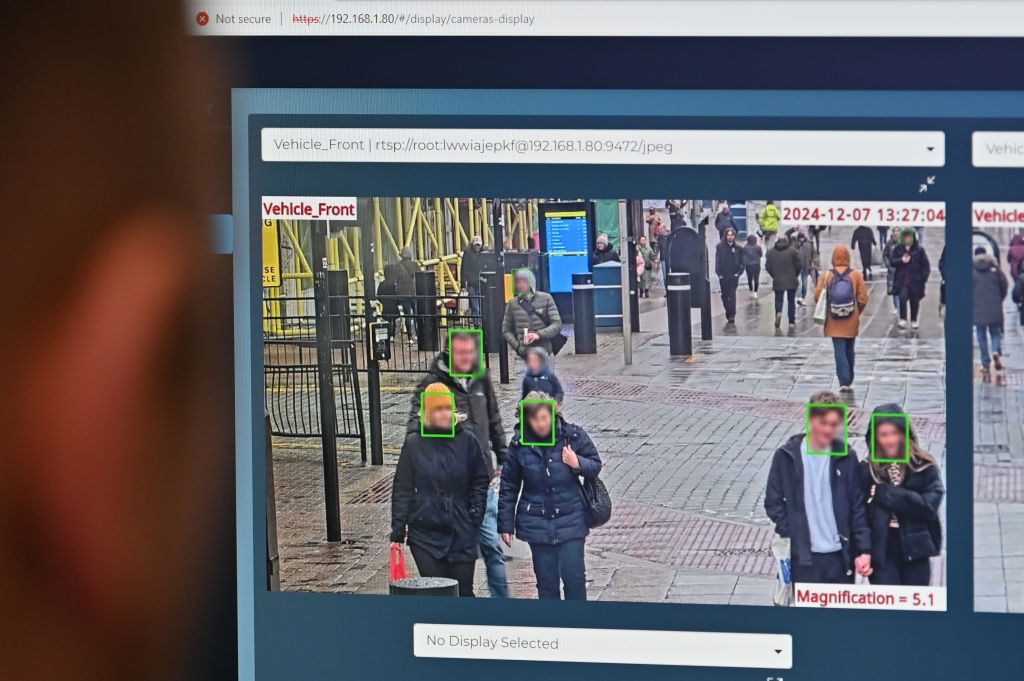
The U.S. automotive market is witnessing growing demand for biometric security technologies such as fingerprint and facial recognition, fueled by rising vehicle theft rates and heightened consumer concerns about security. For example, at MWC 2024, trinamiX and Continental introduced a dual-stage face authentication system enabling contactless unlocking and engine ignition with liveness detection. Also, Ford’s April 2025 patent on a multimodal biometric system aims to detect security threats by analyzing facial and fingerprint data alongside behavioral cues, helping law enforcement identify persons of interest. These innovations reflect a strong industry push to adopt advanced biometric authentication methods that provide safer, more reliable vehicle access and protection against unauthorized use.
Biometric technologies are increasingly embedded into infotainment and connected car systems in the U.S., supporting consumer demand for personalized, secure, and seamless driving experiences. Connected vehicles are expected to make up 95% of all cars by 2030, according to Salesforce, emphasizing biometrics’ critical role in managing secure user profiles and preferences. This integration enables features such as customized climate controls, driver-specific infotainment settings, and secure payment authorization within the vehicle. Companies such as Gentex and IDEMIA are actively advancing these biometric capabilities to strengthen user convenience and data security. As a result, biometrics help foster improved customer loyalty while enabling safer, smarter in-car interactions aligned with digital lifestyle trends.
In the U.S., there is a growing regulatory emphasis on deploying driver monitoring systems (DMS) to enhance road safety by detecting driver fatigue, distraction, and impairment. Technologies combining biometrics with AI and radar are gaining traction to meet these safety mandates. For instance, IDEMIA’s ID2Issuance system, launched in September 2024, supports biometric verification in driver licensing, reinforcing regulatory compliance and identity security. These systems reduce accidents by alerting drivers or intervening when risky behaviors are detected, supporting government and industry efforts to improve driver awareness and prevent collisions.
The burgeoning U.S. EV and autonomous vehicle markets are fast-tracking biometric integration for enhanced security and user experience. Automakers are increasingly adopting biometric systems that combine facial recognition, fingerprint scanning, and behavioral analysis to enable secure keyless entry, personalized driver settings, and real-time safety monitoring. For instance, some leading manufacturers are developing multimodal biometric platforms that allow vehicles to recognize individual drivers and adjust seat positions, climate control, and infotainment preferences automatically. As electric and autonomous vehicles become more prevalent, biometrics are essential for ensuring safe, personalized, and convenient mobility solutions.
Privacy and data security concerns remain a major hurdle for biometric adoption in the U.S. automotive sector. Regulatory frameworks, including Illinois’ Biometric Information Privacy Act (BIPA) and California’s Consumer Privacy Act (CCPA), impose strict controls on biometric data handling. Ford’s patented biometric system raised privacy debates regarding data storage and surveillance risks, illustrating consumer wariness and regulatory challenges. Addressing these concerns through transparent data governance and consent protocols is essential for broader market acceptance.
Offering Insights
The hardware segment accounted for the largest share of 62.8% in 2024. This growth is fueled by increasing demand for advanced driver-focused security, expanded use of driver monitoring systems (DMS), and the rise of seamless in-vehicle payment solutions. U.S. automakers are prioritizing enhanced driver personalization and safety, driving the integration of embedded biometric sensors in a wide range of vehicles. Leading suppliers, including U.S.-based companies, are developing automotive-grade biometric sensors built to withstand harsh in-cabin conditions. These sensors enable accurate driver authentication and support secure access to vehicle functions, reflecting the strong market push for biometric hardware tailored to U.S. drivers’ needs.
The software segment is projected to grow at a significant CAGR during the forecast period, fueled by increasing demand for real-time biometric data processing, multimodal authentication, and seamless integration with advanced vehicle systems. The rise of connected car ecosystems is further fueling the need for intelligent biometric software that works across infotainment, navigation, and driver monitoring systems to enhance security and user experience. For example, in March 2025, IDEMIA partnered with Arkansas’ Department of Finance and Administration to launch a secure mobile ID solution. This digital driver’s license enables residents to verify their identity via mobile devices, marking a significant advancement in biometric identity verification within the U.S. automotive and driver services sectors.
Technology Insights
The fingerprint recognition segment accounted for the largest share in 2024, driven by strong demand for secure and convenient driver authentication methods. The widespread adoption of fingerprint-based vehicle access systems reflects their reliability, cost-effectiveness, and ease of integration with existing vehicle hardware. Compared to facial or iris recognition, fingerprint systems require fewer changes to vehicle interiors, making them a preferred choice for automakers and consumers alike. Increasing use of fingerprint sensors in push-start ignition and infotainment personalization is enhancing both security and user experience, solidifying the segment’s leading position in the U.S. automotive biometric market.
The iris recognition segment is projected to grow at the fastest CAGR from 2025 to 2033,fueled by growing demand for highly secure and contactless biometric solutions that work effectively in low-light and confined settings. Iris recognition offers superior accuracy and stronger resistance to spoofing compared to other biometric methods, making it ideal for in-vehicle driver authentication and secure digital transactions. For example, leading U.S.-based technology providers are collaborating to develop iris-based authentication integrated with driver monitoring systems, enhancing vehicle security and personalization. This trend underscores the expanding role of iris biometrics in delivering next-generation, secure automotive user experiences in the country.
Application Insights
The vehicle access control segment accounted for the largest share in 2024, driven by rising demand for keyless entry systems, increased adoption of biometric authentication, stronger focus on theft prevention, and growing integration of personalization features in connected vehicles. Automakers and suppliers are developing advanced access solutions that improve convenience and security for drivers. For instance, players in the market are exploring voice biometric systems to enable secure, keyless vehicle entry and personalized driver settings. These innovations align with the smart mobility trend, supporting seamless and intelligent in-car experiences for American consumers while addressing evolving security needs.
The driver monitoring systems (DMS) segment is projected to register a notable CAGR from 2025 to 2033, fueled by increasing concerns about road safety and rising regulatory attention focused on reducing accidents caused by driver fatigue and distraction. The growing demand for AI-enhanced biometric technologies that accurately monitor driver behavior is driving automakers to invest heavily in advanced in-cabin safety systems.
Vehicle Type Insights
The passenger cars segment accounted for the largest share in 2024, driven by the widespread adoption of biometric systems which enhances vehicle security and delivering personalized in-car experiences. Increasing consumer demand for features like fingerprint ignition, facial recognition, and driver monitoring systems (DMS) is particularly strong in mid to high-end passenger vehicles. According to CEIC Data, the U.S. had approximately 283 million registered vehicles in 2022, with passenger car sales rising to 3.1 million units in December 2023, up from 2.86 million units in December 2022. This expanding vehicle fleet and continued innovation in biometric technologies reinforce passenger cars as the leading segment for biometric integration, supported by regulatory emphasis on driver safety and security.
The commercial vehicles segment is projected to register a notable CAGR from 2025 to 2033, supported by increasing reliance on biometric technologies to enhance driver verification, reduce operational risks, and ensure regulatory compliance. Fleet operators are increasingly implementing biometric systems for secure access, real-time driver fatigue monitoring, and improved accountability to combat issues such as unauthorized vehicle use and cargo theft. According to CEIC Data, the U.S. had 283.4 million registered vehicles in 2022, including 278.9 million private and commercial vehicles. This extensive commercial fleet underscores the rising potential for biometrics to play a critical role in improving fleet safety and operational oversight.
Key U.S. Automotive Biometric Company Insights
Some of the key companies in the U.S. automotive biometric marketinclude Fujitsu Limited, Continental AG, Synaptics Incorporated, VOXX International Corporation, Methode Electronics Inc., Gentex Corporation, Cerence Inc., and others. The key participants focus on adopting strategies such as service differentiation, inclusion of customization and personalization in service offerings, and improved customer assistance to address growing competition.
-
Founded in 1935 and headquartered in Tokyo, Japan, Fujitsu Limited is a global information and communication technology company. The company specializes in providing advanced biometric solutions, including facial recognition and fingerprint authentication technologies for the automotive sector. Fujitsu offers a range of services spanning hardware, software, and IT infrastructure, supporting smart mobility, secure vehicle access, and driver monitoring systems.
-
Founded in 1986 and headquartered in San Jose, California, United States, Synaptics Incorporated is a leading developer of human interface solutions. The company provides advanced biometric technologies such as fingerprint sensors and touch controllers tailored for automotive applications. Synaptics’ solutions enable secure vehicle access, personalized driver authentication, and intuitive in-cabin controls, supporting the growing demand for connected, intelligent, and user-centric mobility experiences.
Key U.S. Automotive Biometric Companies:
- Fujitsu Limited
- Synaptics Incorporated
- Continental AG
- Fingerprint Cards AB
- Safran S.A.
- VOXX International Corporation
- Methode Electronics Inc.
- Gentex Corporation
- Cerence Inc.
- HID Global Corporation.
Recent Developments
-
In April 2025, Gentex Corporation completed its all-cash acquisition of VOXX International, securing access to EyeLock’s iris biometric technology. The deal strengthens Gentex’s biometric and smart vehicle capabilities, aligning with its strategy to expand advanced driver authentication solutions in the U.S. automotive market.
-
In January 2025, Mitsubishi Electric Automotive America introduced its FLEXConnect system at CES. The cloud-based platform uses facial recognition and health monitoring to improve driver safety and personalize the in-car experience, showing progress in U.S. automotive biometric technology.
-
In November 2024, Continental AG and trinamiX unveiled the Invisible Biometrics Sensing Display, featuring concealed cameras and laser projectors behind OLED screens. The system monitors vital signs and uses 3D mapping for airbag deployment and seatbelt detection, enhancing safety and biometric monitoring in vehicles.
-
In September 2023, Mastercard Inc. and Mercedes-Benz launched a biometric fuel payment system in Germany, allowing drivers to pay via fingerprint scan integrated into the MBUX infotainment system. Supported at 3,600+ gas stations, this system enhances secure, seamless in-car payments and reflects Mercedes-Benz’s broader biometric technology strategy.
U.S. Automotive Biometric Market Report Scope
|
Report Attribute
|
Details
|
|
Market size value in 2025
|
USD 358.3 million
|
|
Revenue Forecast in 2033
|
USD 1,223.0 million
|
|
Growth rate
|
CAGR of 16.6% from 2025 to 2033
|
|
The base year for estimation
|
2024
|
|
Historical data
|
2020 – 2023
|
|
Forecast period
|
2025 – 2033
|
|
Quantitative units
|
Revenue in USD million/billion and CAGR from 2025 to 2033
|
|
Report Coverage
|
Revenue forecast, company market share, competitive landscape, growth factors, and trends
|
|
Segments Covered
|
Offering, technology, application, vehicle type
|
|
Key companies profiled
|
Fujitsu Limited; Synaptics Incorporated; Continental AG; Fingerprint Cards AB; Safran S.A.; VOXX International Corporation; Methode Electronics Inc.; Gentex Corporation; Cerence Inc.;HID Global Corporation.
|
|
Customization scope
|
Free report customization (equivalent to up to 8 analysts’ working days) with purchase. Addition or alteration to country, regional & segment scope.
|
|
Pricing and purchase options
|
Avail customized purchase options to meet your exact research needs. Explore purchase options
|
U.S. Automotive Biometric Market Report Segmentation
This report forecasts revenue growth at the country level and provides an analysis of the latest industry trends in each of the sub-segments from 2020 to 2033. For this study, Grand View Research has segmented the U.S. automotive biometric Market report based on offering, technology, application, and vehicle type.
-
Offering Outlook (Revenue, USD Million, 2021 – 2033)
-
Hardware
-
Software
-
Service
-
-
Technology Outlook (Revenue, USD Million, 2021 – 2033)
-
Fingerprint Recognition
-
Facial Recognition
-
Voice Recognition
-
Iris Recognition
-
-
Application Outlook (Revenue, USD Million, 2021 – 2033)
-
Vehicle Access Control
-
Driver Identification & Personalization
-
Driver Monitoring Systems (DMS)
-
Infotainment & HMI Control
-
In-Car Payment Authentication
-
-
Vehicle Type Outlook (Revenue, USD Million, 2021 – 2033)
-
Passenger Cars
-
Commercial Vehicles
-
Frequently Asked Questions About This Report
b. The U.S. automotive biometric market size was estimated at USD 330.0 million in 2024 and is expected to reach USD1,223.0 million in 2033.
b. The U.S. automotive biometric market is expected to grow at a compound annual growth rate of 16.6% from 2025 to 2033 to reach USD 1,223.0 million by 2033.
b. The hardware segment accounted for the largest share of 62.8% in 2024. This growth is fueled by increasing demand for advanced driver-focused security, expanded use of driver monitoring systems (DMS), and the rise of seamless in-vehicle payment solutions. U.S. automakers are prioritizing enhanced driver personalization and safety, driving the integration of embedded biometric sensors in a wide range of vehicles.
b. Some key players operating in the U.S. automotive biometric market include Fujitsu Limited, Synaptics Incorporated, Continental AG, Fingerprint Cards AB, Safran S.A., VOXX International Corporation, Methode Electronics Inc., Gentex Corporation, Cerence Inc., HID Global Corporation.
b. Key factors that are driving the market growth include rising demand for enhanced vehicle security through biometric authentication methods such as fingerprint and facial recognition, in response to growing vehicle theft and safety concerns. Increasing integration of biometrics with infotainment and connected car systems is enabling a personalized and seamless in-car experience, aligning with evolving U.S. consumer expectations.
link