Understanding Nuclear Energy with Nuclear 101 Conversation

Nuclear energy has been a controversial topic in the United State and New York since the 1980s — however, today the technology is seen by some as a solution to produce green energy. For example, Microsoft plans to restart Three Mile Island Unit 1 to power its data centers.
A presentation hosted by Stony Brook’s Collaborative for the Earth on November 18 sought to generate new discussion about the renewable, economic and political issues of nuclear energy in a conversation tailored for the non-scientists.
“The Collaborative for the Earth’s focus on nuclear technologies this year is extremely timely because nuclear energy is now seen by many as a key technology in fighting climate change even as society wrestles with concerns over waste storage and the risk of accidents,” said Heather Lynch, director of the C4E and endowed chair for ecology and evolution in the Institute for Advanced Computational Sciences.
The Nuclear 101 presentation addressed the resurgence of nuclear power plants to address the growing need for power, including the dramatic need for electricity to run large artificial intelligence (AI) driven data centers, the science behind nuclear reactors, and the challenges of public perception of nuclear power. Lance Snead, the dean’s chair for research in the College of Engineering and Applied Sciences (CEAS) and a fellow of the American Nuclear Society, shared his expertise on nuclear energy, drawing from his early work on developing low-radioactivity materials for both fission and fusion reactors.
Snead wanted the conversation between a few dozen students, faculty, and staff to focus on the rationale behind the recent choice by Amazon, Microsoft, and Google to significantly invest in nuclear power technology to produce large-scale renewable energy to power data centers. While corporate decision-makers anticipate their products would drive a 10 percent increased energy demand in the U.S. within five years, he said they balanced a number of factors to come to that decision: the need for reliable power, cost, and public perception that their immense use of power would have on the environment.
“We need energy, we need power,” Snead said, noting that the thermodynamic process is relatively simple. “You’re taking something that is generally hot, taking it too cold, and in that event, you’re getting heat and power.”
Snead said the growth in fossil fuel consumption in New York, as it is in the U.S. and internationally, still far outpaces that of renewable energy.
Moving forward, New York’s progress with renewables is predicted to be slow and could be accelerated with nuclear energy:
- New York’s use of nuclear energy is limited due to cost and negative perception.
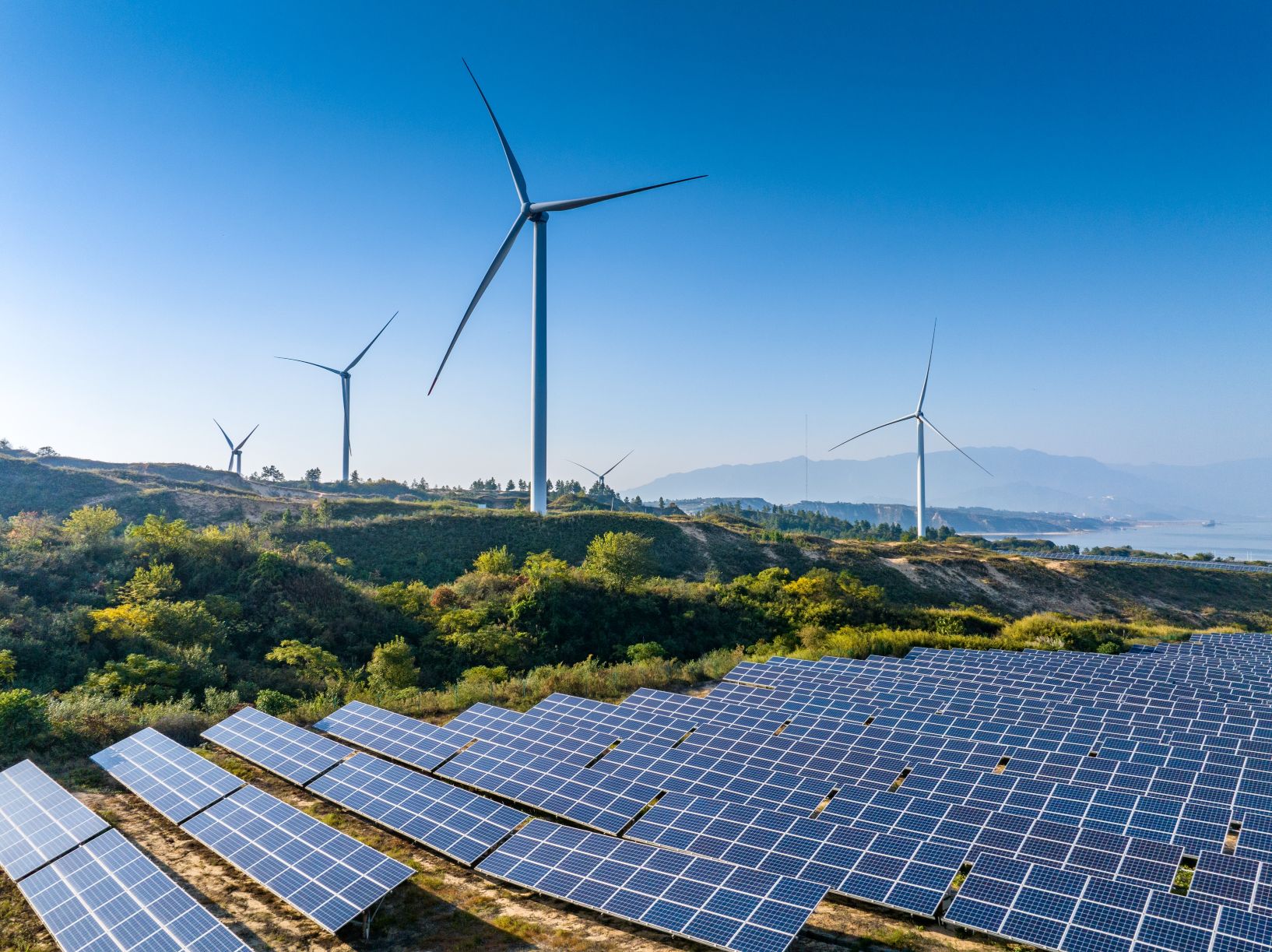
- The state relies on its fledgling offshore wind farms, large-scale solar panel arrays, and Canadian hydropower plants, which all produce a fraction of the amount of energy that one nuclear power plant can produce.
- Given the dense population of New York and the low-energy density production of solar and wind, along with the intermittent nature of both, high-density fossil fuels are necessary as a bridge power source, which are high carbon emitters.
- Upstate New York has some hydropower plants, which are infrastructures that use the kinetic energy of moving water, but they risk environmental displacement.
Currently, nuclear and hydroelectric power are about equal contributors to the low-carbon energy produced in New York, in total producing almost half of our energy needs and mostly located upstate. “These are still big stations that are approaching gigawatts, so they produce a lot of power, you need transmission lines to take the power where it’s going,” Snead said. Power plant size and necessary electric grid requirements have also been a serious factor in deciding placement of a range of low-carbon energy technologies and have driven a discussion of right-sizing nuclear power stations and so-called “small modular reactors.”
Know the key process of nuclear energy:
Fission: Splits heavy atoms into smaller ones, releasing energy
Fusion: Combines small atoms into a heavier one, releasing energy
Moderators: Slow fast neutrons, making them absorbable by fuel to sustain the chain reaction
Reactors: Essential for maintaining fission chain reactions, which produce heat and are used to generate power
Coolants: Water that is used to remove heat from the reactor core and fuel pools
 There are plans to double the more than 400 reactors operating across 31 nations globally, with the United States currently investing in new fission and fusion power plants and technology. However, a struggle to develop nuclear power in the U.S. has revolved around public perception following the severe accidents and core melt in 1979 at Three Mile Island (TMI) Unit 2 in Pennsylvania and at the Fukushima Daiichi reactors in 2021, as well as the loss of life at the Chernobyl weapons reactor in 1986.
These events caused a wave of negative public opinion and policy decisions essentially curtailing all new-build activity domestically. For example, the Shoreham Nuclear Power plant’s construction and commissioning on Long Island was delayed in part by local opposition and by then-Governor Mario Cuomo. The Long Island Lighting Company agreed not to operate the reactor until it was fully decommissioned in 1994. In 2002, a large gas-fired turbine was constructed on site to satisfy New Haven, Connecticut’s power needs. This was followed by the relatively modest installation of two 50 kW wind turbines on site as part of a Long Island Power Authority Renewable Energy Project.
It has been noted that had the Shoreham plant been allowed to operate, it would have prevented the emission of an estimated 3 million tons of carbon dioxide per year.
Since the 1980s, national polling of those who favor the use of nuclear power has steadily increased from less than half to more than 75 percent today, regardless of gender, political, and educational lines.
Since the construction of the TMI and Fukushima reactors — both 1960s vintage Generation I reactors — significant design improvements have been made, many of which added layers of safety as lessons learned from the TMI accident, Snead said. Most reactors operating today are Generation III reactors with the most recently built reactor — at the Vogtle plant in Georgia this year — being a Generation IV predicted to be “impossible to melt-down.”
“You always have multiple boundaries to protect the public. The first one is the fuel rod, but that’s not a very good boundary at all. Then, you have the main boundary, which is this reactor pressure vessel,” Snead said. “So, in theory, the reactor pressure vessel, no matter what happens, you cannot release radioactivity. It’s basically a very thick pressure vessel of steel.”
In fact, according to a wide body of research, nuclear energy has the least amount of impact on the environment and people of the common energy sources through an assessment of global deaths per power source, and contributes 11 percent of worldwide electricity, which suggests that “maximizing renewables or maximizing nuclear will have less of an impact on global deaths,” Snead said. This is the case as compared to any of the other non-renewable power options.
He acknowledged another dilemma is the storage of nuclear waste, which while the volume of nuclear waste is quite small, and can be safely handled on-site, has no current long-term solution for disposal for political reasons. Moreover, the reprocessing or recycling of spent nuclear reactor fuel has been banned in the U.S. since 1977. Additionally, the construction cost of nuclear plants in the U.S. has far outpaced the rest of the world for a range of reasons, including a nearly five-decade hiatus in building these large power stations. He added that precautions are in place to protect nearby areas.
Lynch, C4E’s director, said she hopes this year’s deep dive into nuclear energy will inspire faculty, staff, and students to think about the very real trade-offs we will face when it comes to addressing today’s environmental challenges, and not just those working in the College of Engineering and Applied Sciences. “The conversation around nuclear extends right across Stony Brook’s research enterprise, especially now that companies like Microsoft are pursuing nuclear energy as a means for powering the AI revolution,” she said. “This isn’t a topic we can ignore, so we might as well get right to the issues that confront us.”
C4E hosted a screening of Nuclear Now, a 2022 American documentary film, directed and co-written by Oliver Stone, in November with a talk-back with faculty experts.
The Collaborative continues to focus on nuclear energy in Spring 2025, with the following events:
— Melanie Karniewich
J.D. Allen contributed to this story
link